Logo Light
  • About Us
  • Services
  • Locations
  • Blog
  • Careers
  • Contact Us
Schedule a Consultation

The 4 Functions of Behavior in ABA: How Your Child's BCBA Uses Them

Emotions
Understanding why a child behaves a certain way is key to helping them learn and grow. This blog explores the four functions of behavior in ABA therapy—escape, attention, access to preferred items or activities, and sensory reinforcement—and how Board Certified Behavior Analysts (BCBAs) use this knowledge to develop individualized treatment strategies. Learn how identifying the reasons behind behaviors can help children with autism build communication skills, develop independence, and find more effective ways to express their needs through meaningful, everyday learning experiences.

What Is ABA Therapy? A Guide for Parents New to an Autism Diagnosis

Featured
If your child has recently received an autism diagnosis, learning about therapy options can feel overwhelming. This guide explains Applied Behavior Analysis (ABA) therapy in clear, parent-friendly terms, including how ABA can help young children develop meaningful skills in communication, social interaction, play, daily routines, and independence. It also covers the role of a BCBA, what ABA therapy can look like for young children, when therapy may begin, insurance considerations, and what parents should look for when choosing an ABA provider.

What Is an Autism Evaluation? What to Expect When Seeking One

Featured
If you have questions about your child’s development, communication, or behavior, an autism evaluation can provide valuable answers and guidance. This blog explains what an autism evaluation involves, common signs that may lead parents to seek one, and how qualified professionals assess a child’s developmental needs. Learn about the difference between autism screening and a formal evaluation, what to expect during the diagnostic process, how long evaluations may take, and insurance considerations. Discover how early identification and intervention can help families access appropriate support and services to encourage their child’s communication, independence, and overall development.

Ready for New Adventures: Teaching Safety Skills Before Preschool

Featured
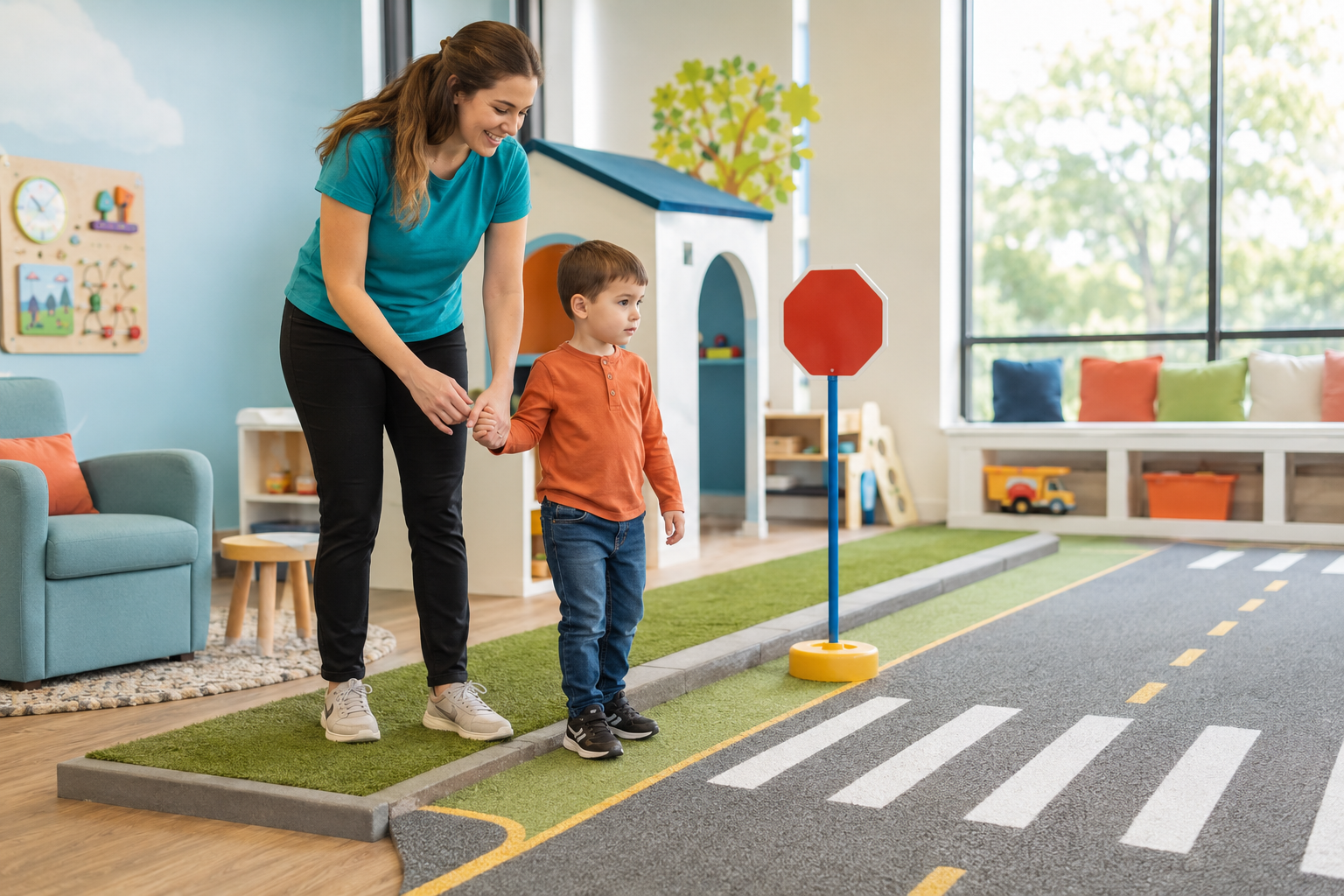
Preparing for preschool is an exciting milestone, and helping young children with autism develop essential safety skills is an important part of building confidence and independence. This blog explores practical ways parents and caregivers can teach foundational safety skills, including staying close to trusted adults, responding to their name, following simple directions, and recognizing potentially unsafe situations. Discover how play-based ABA therapy, visual supports, positive reinforcement, and consistent practice can help children develop greater safety awareness. With individualized support and encouragement, families can help their children navigate new environments, manage transitions, and prepare for preschool adventures with greater confidence.

Learning Through Play: Building Early Skills in an ABA Program

Emotions
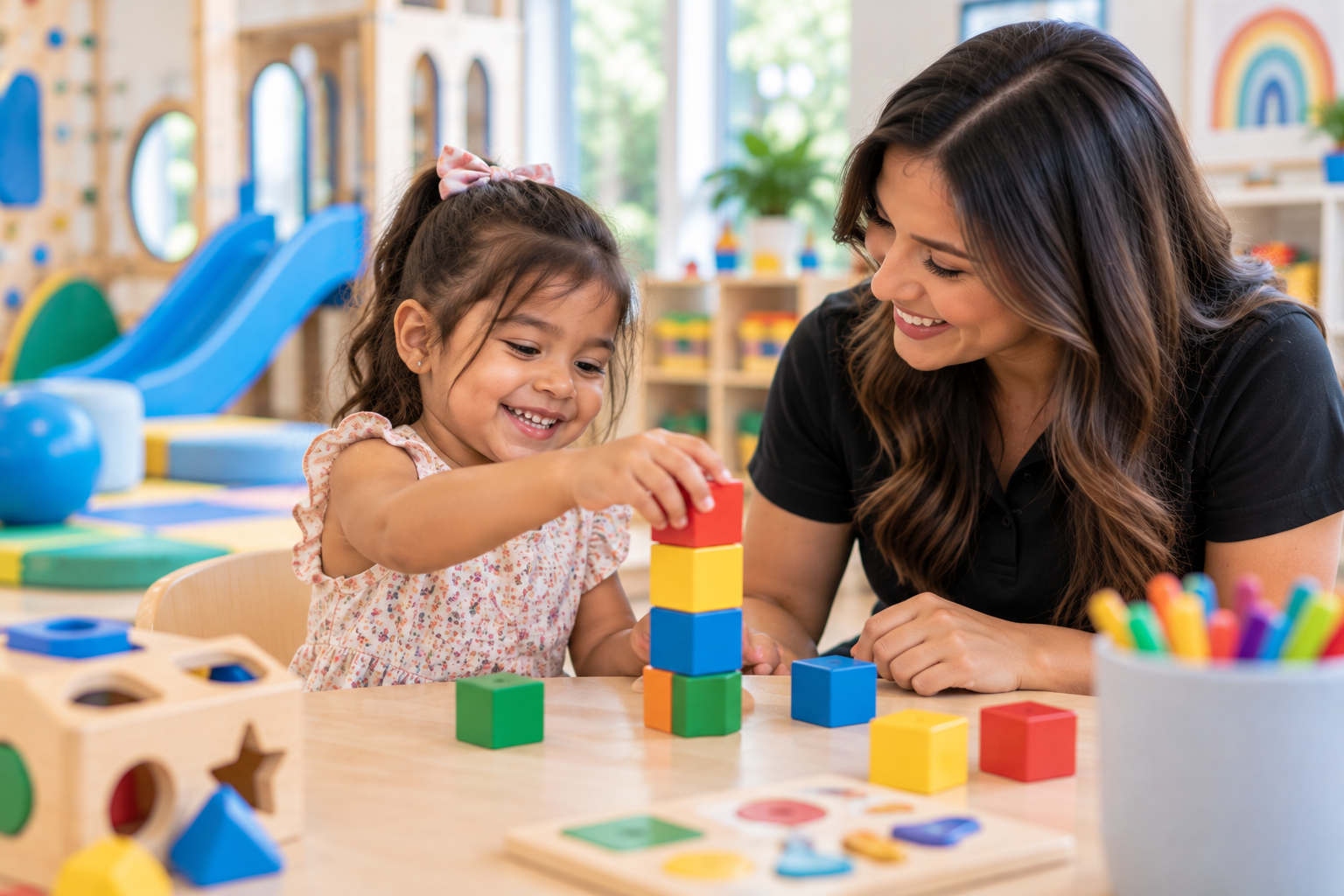
Play is more than just fun—it’s an important part of how young children learn, grow, and develop essential life skills. This blog explores how play-based Applied Behavior Analysis (ABA) therapy helps children with autism strengthen communication, social interaction, problem-solving, and independence in a supportive, engaging environment. Discover how structured and child-led play activities can encourage learning, build confidence, and help children develop foundational skills for everyday life and future preschool experiences. Learn how My Favorite Therapists incorporates meaningful, play-based learning into individualized ABA programs to help every child reach their full potential.

New Routines, Growing Confidence: Helping Young Children Adjust to Change

Emotions
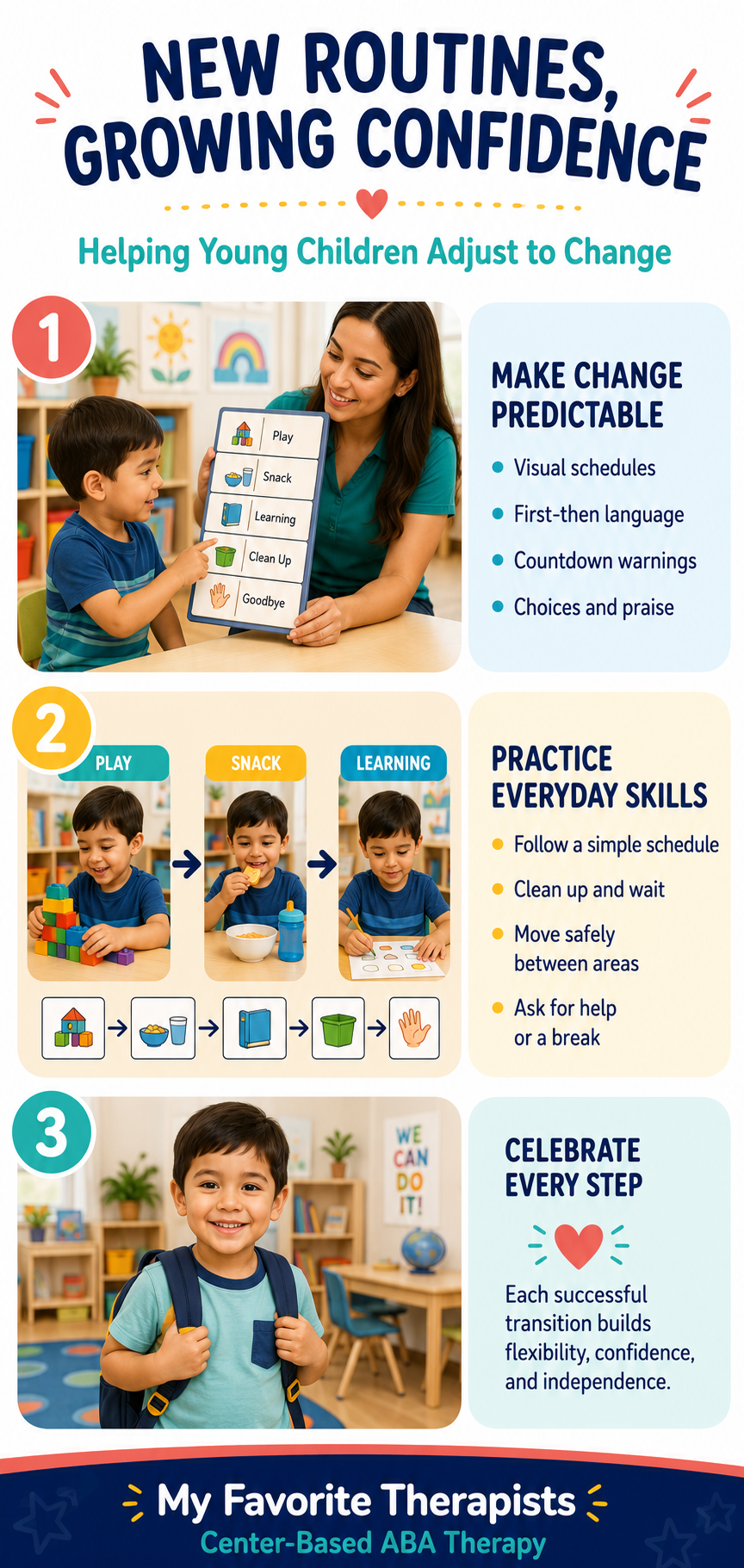
Changes in daily routines can be challenging for young children, especially those with autism who may thrive on predictability and familiar experiences. This blog explores how parents and caregivers can help children navigate transitions, build confidence, and develop greater flexibility through patience, consistency, and supportive strategies. Learn how center-based ABA therapy helps young children practice everyday transitions using visual schedules, positive reinforcement, and gradual exposure to new experiences. Discover practical ways to support smoother routines at home, strengthen communication and coping skills, and prepare children for preschool while celebrating every small step toward greater independence.

Understanding Elopement: Preventing Wandering During Summer Adventures

Family Fun
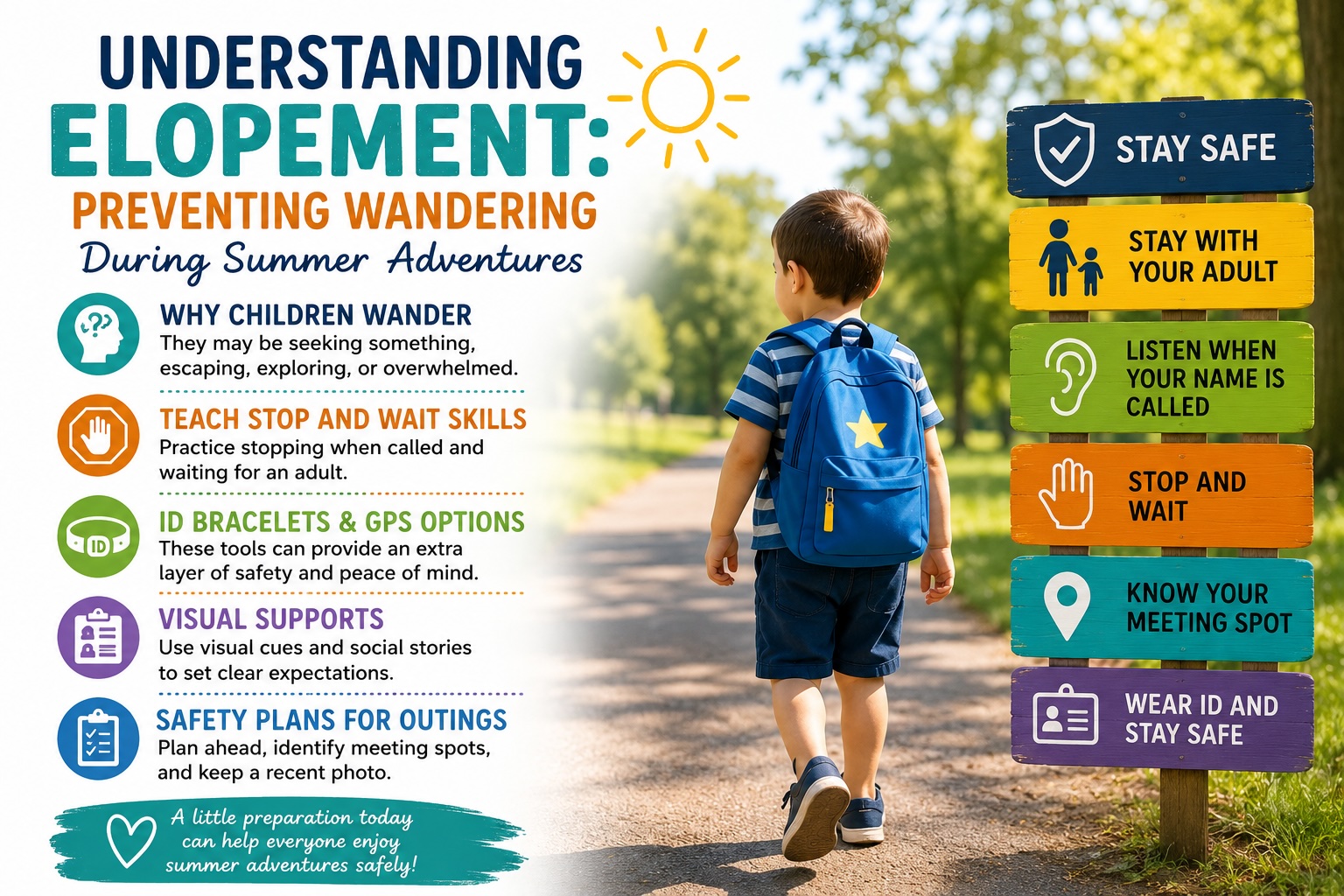
For families of young children with autism, summer outings can bring exciting experiences along with important safety considerations. This blog explores elopement, or wandering away from a safe environment, and offers practical strategies to help parents and caregivers reduce risks during outdoor activities, family vacations, and everyday adventures. Learn how proactive planning, consistent supervision, communication strategies, and individualized ABA therapy can help children develop safety awareness and essential skills. Discover ways to create safer, more enjoyable summer experiences while supporting your child's growing independence and confidence.

Packing the Ultimate Autism-Friendly Summer Outing Bag

Family Fun
Summer adventures can be exciting for young children with autism, but preparing for new environments, sensory experiences, and unexpected changes can make outings more enjoyable for the whole family. This blog explores how to pack an autism-friendly summer outing bag with helpful essentials, including sensory-friendly items, comfort objects, favorite snacks, communication tools, and important safety supplies. Discover practical tips for managing sensory sensitivities, supporting transitions, and keeping children comfortable and engaged during family activities. With thoughtful preparation and the right resources, parents can help their children build confidence, encourage independence, and enjoy memorable summer experiences together.

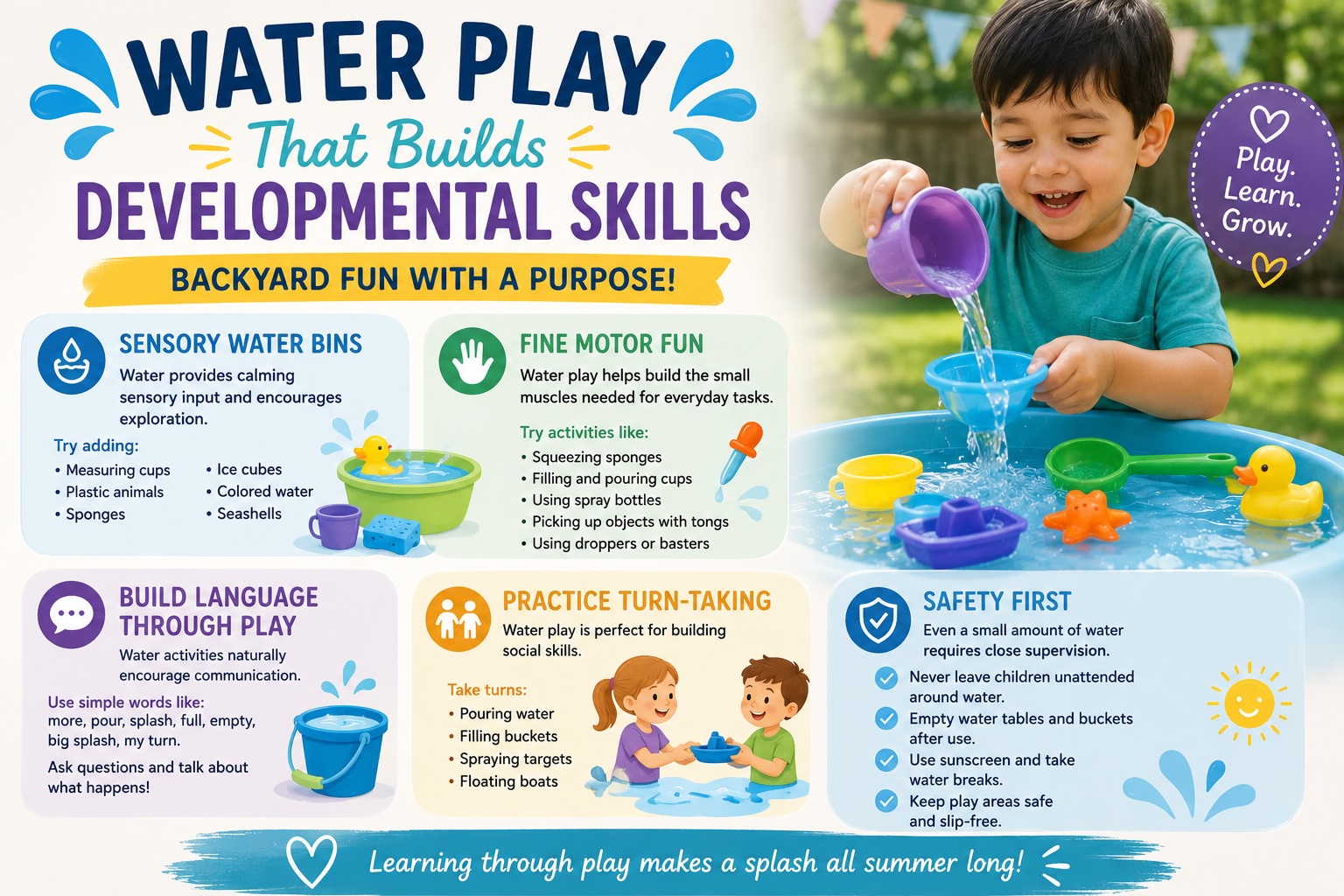
Water Play That Builds Developmental Skills

Family Fun
Water play is more than a fun way to cool off—it can also provide valuable opportunities for young children with autism to learn, explore, and grow. This blog highlights how engaging, hands-on water activities can support sensory exploration, fine motor development, communication, social interaction, and early problem-solving skills. Discover simple, playful activities that parents and caregivers can incorporate into summer routines to encourage learning while building confidence and independence. With thoughtful planning, appropriate supervision, and individualized support, water play can become an enjoyable way to strengthen essential developmental skills through everyday experiences.

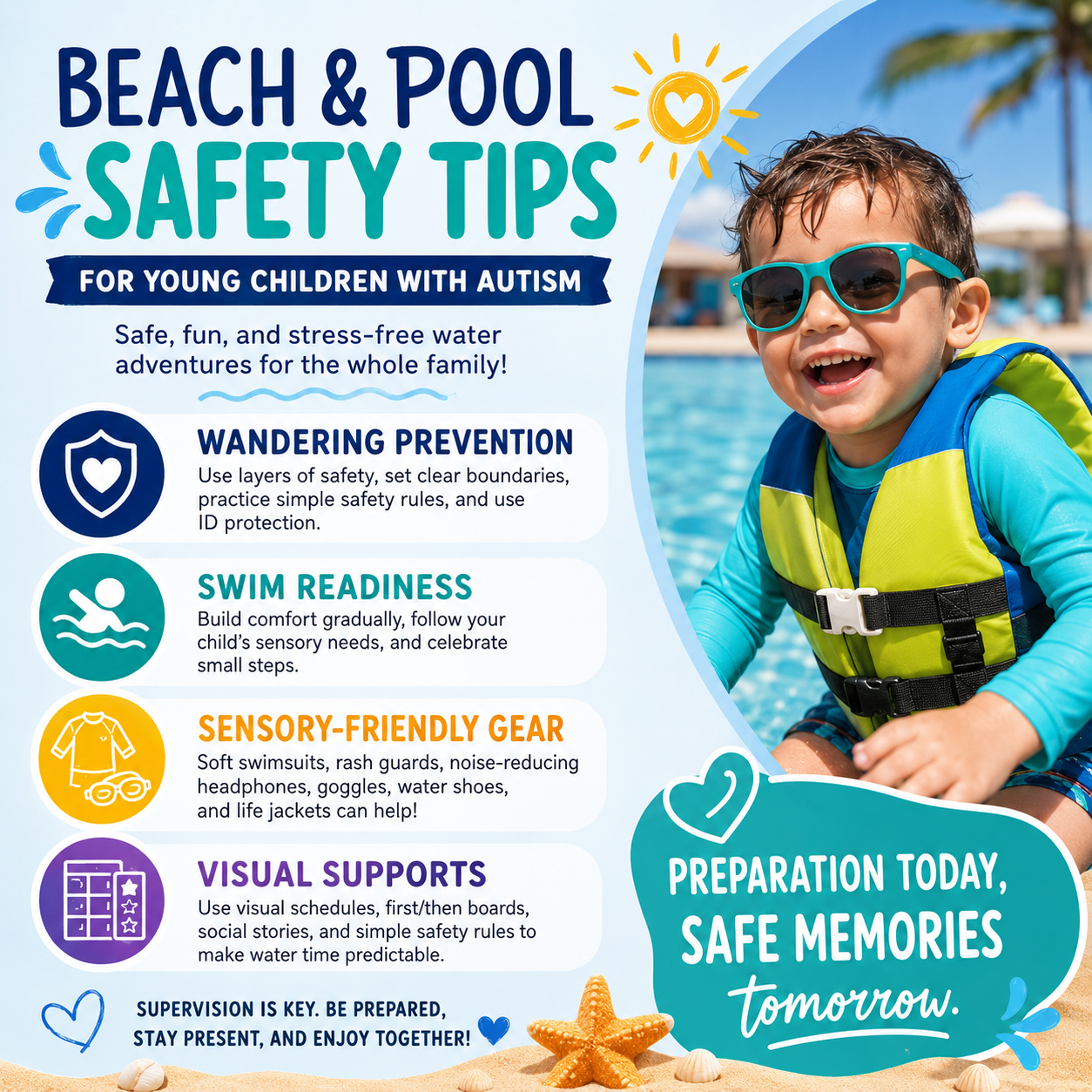
Beach and Pool Safety Tips for Young Children with Autism

Family Fun
Beach and pool outings can be wonderful opportunities for summer fun, but they also require extra planning and safety precautions for young children with autism. This blog explores essential water safety strategies, including close supervision, preventing wandering, establishing clear safety rules, and preparing children for unfamiliar environments. Discover practical ways to address sensory sensitivities, build water safety awareness, and support communication through consistent routines and individualized strategies. With thoughtful preparation and proactive safety measures, families can create safer, more enjoyable experiences while helping their children build confidence and independence around water.

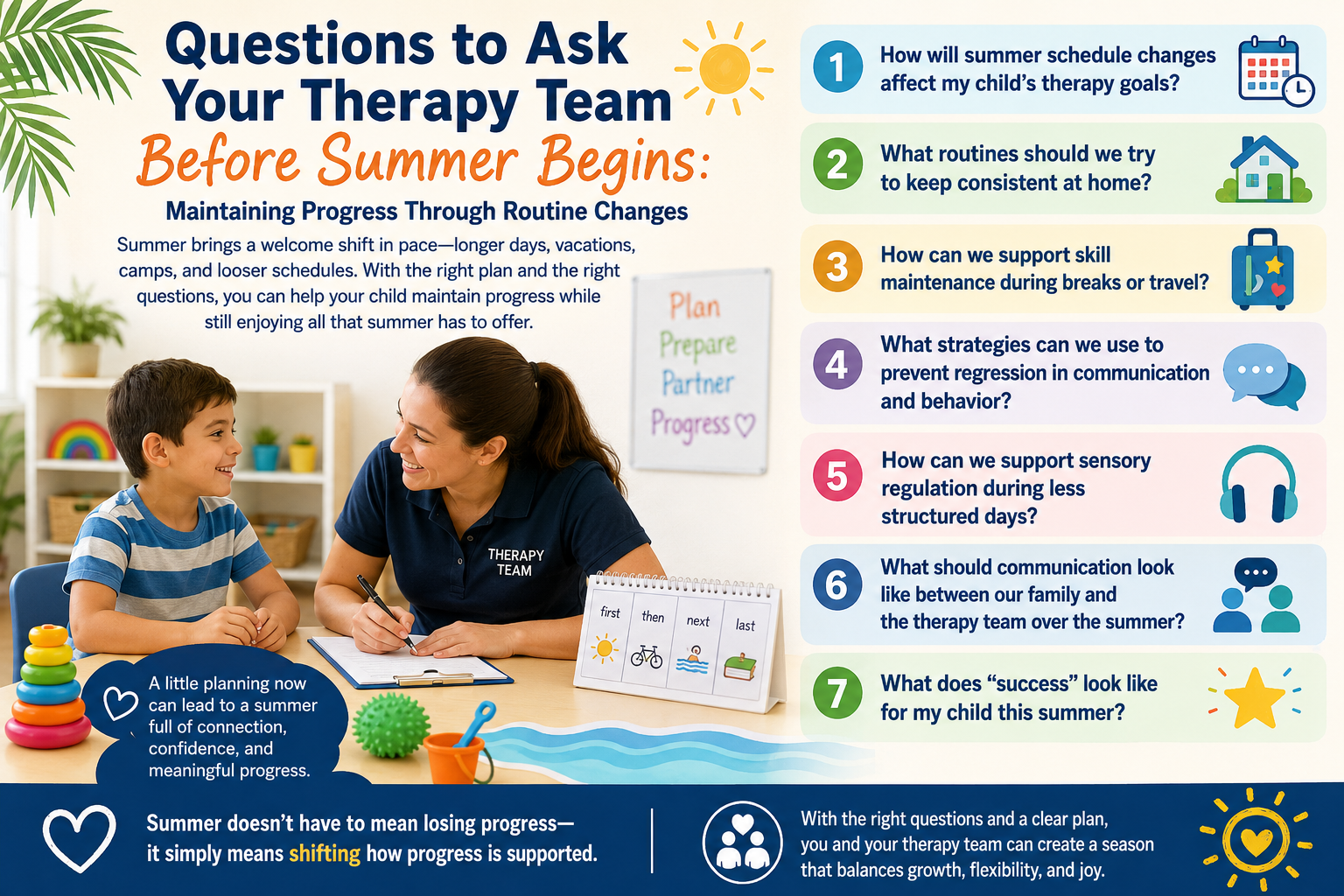
Questions to Ask Your Therapy Team Before Summer Begins: Maintaining Progress Through Routine Changes

Family Fun
Summer brings exciting opportunities for family adventures, but changes in daily routines can present challenges for young children with autism. This blog explores important questions parents can ask their ABA therapy team to help maintain developmental progress during summer breaks, vacations, and schedule changes. Learn how to support consistency between therapy and home, reinforce communication and daily living skills, prepare for transitions, and establish realistic summer goals. With open communication, thoughtful planning, and collaboration with your child's therapy team, families can help children continue building confidence, independence, and essential skills while enjoying all that summer has to offer.

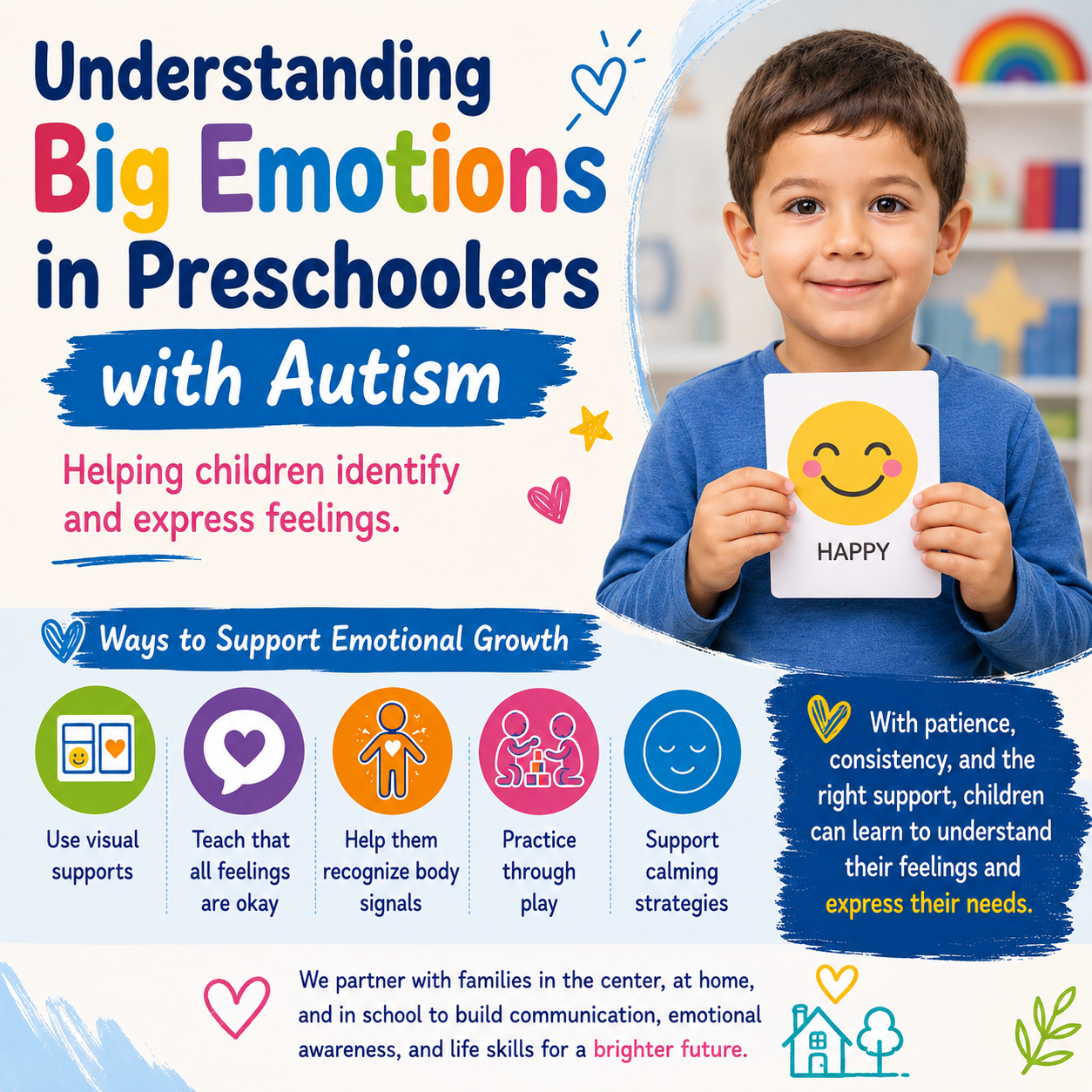
Understanding Big Emotions in Preschoolers with Autism: Helping Children Identify and Express Feelings

Emotions
Big emotions can be challenging for young children with autism, especially when they are still developing the skills to recognize, communicate, and manage their feelings. This blog explores how parents and caregivers can help preschoolers identify emotions, express their needs, and develop healthy coping strategies through play-based learning, visual supports, and positive reinforcement. Discover how individualized ABA therapy can support emotional development, strengthen communication, and help children navigate everyday frustrations and transitions. With patience, consistency, and encouragement, families can help their children build emotional awareness, confidence, and essential skills for everyday life and future preschool experiences.

Songs and Rhymes That Encourage Communication

Family Fun
Music, songs, and rhymes offer fun and engaging ways to help young children with autism develop essential communication skills. This blog explores how familiar melodies, repetition, movement, and interactive singing can encourage language development, listening, imitation, and social interaction. Discover simple ways parents and caregivers can incorporate music into everyday routines to support verbal and nonverbal communication, build confidence, and strengthen connections. Learn how play-based ABA therapy can use songs and rhymes to create meaningful learning opportunities while helping children develop foundational skills for greater independence and future preschool success.

Books About Feelings and Emotions for Ages 2–5

Books can be powerful tools for helping young children with autism recognize, understand, and express their emotions. This blog explores how age-appropriate stories, colorful illustrations, and relatable characters can support emotional awareness, communication, and social development in children ages 2–5. Discover how parents and caregivers can use interactive reading, visual cues, and simple conversations to help children identify feelings, build empathy, and develop healthy coping strategies. Learn how incorporating books about emotions into everyday routines can create meaningful learning opportunities, strengthen parent-child connections, and build foundational skills for preschool readiness and greater independence.

How Visual Schedules Improve Learning and Independence

Featured
Visual schedules for children are practical tools that help guide daily activities, support learning, and promote independence. For many children, especially those working with applied behavior analysis in Deerfield Beach FL, visual schedules create a predictable environment that makes it easier to understand expectations and follow routines. These schedules are often used in homes, schools, and therapy settings to assist children in completing tasks with minimal assistance.

Fun Cognitive Development Activities

Featured
At My Favorite Therapists, learning happens through fun, movement, and playful discovery. Children are encouraged to explore their surroundings in ways that feel natural and enjoyable. These sessions focus on cognitive development activities that support thinking, memory, attention, and communication. Located in Deerfield Beach, this welcoming space allows children to feel safe while practicing skills that support everyday learning through play and social interaction.

Top Activities That Improve Memory and Cognitive Skills

Featured
Memory plays a central role in how we learn, think, and interact with the world. Engaging in the right activities for memory development can support focus, recall, and problem-solving at every age. Families in Deerfield Beach often seek meaningful ways to support growing minds, and My Favorite therapists provides guidance that connects play with learning support in everyday life.

Understanding the Difference Between Shyness and Social Avoidance

Featured
When parents notice quiet behavior, they often wonder about shyness vs social avoidance. While both may look similar at first glance, they come from different emotional experiences. Shyness usually reflects temporary discomfort in social settings, while social avoidance often involves deeper fear or distress linked to child interaction and social development patterns.
×

Please provide your contact information so our therapist team
can connect within 24 hours.

* We do not accept Medicaid

***By providing your phone number, you agree to receive a phone call from a member of our intake team to discuss therapy options. We do not send marketing or automated text messages to this number. Standard voice call rates may apply.***

✓
Thank You For Your Submission!

Your information has been submitted.
Our team will be in touch within 24 hours.

Logo Dark
Serving children with Autism Spectrum Disorder and other developmental delays.
About Us
Services
Contact Us
Schedule a Consultation
Locations
Davie
954-869-8713
Deerfield Beach
754-600-8388
Palm Beach
561-369-6372
Orlando
321-352-4819
Altamonte Springs
321-352-4819
Tampa
813-214-6746
Privacy Policy & SMS Terms & Conditions
‍