.png)
If your child has recently received an autism diagnosis, you may have heard the term ABA therapy from your pediatrician, evaluator, insurance company, or another parent. But what is ABA therapy, and what does it actually look like for a young child?
Applied behavior analysis (ABA) is an evidence-based approach that uses the science of learning and behavior to help children develop meaningful skills. ABA programs are individualized, which means therapy goals are selected based on each child's strengths, needs, developmental level, and family priorities.
For a young child, those goals might include learning to ask for help, communicating wants and needs, participating in play, following everyday routines, building social skills, or becoming more independent with daily living skills.
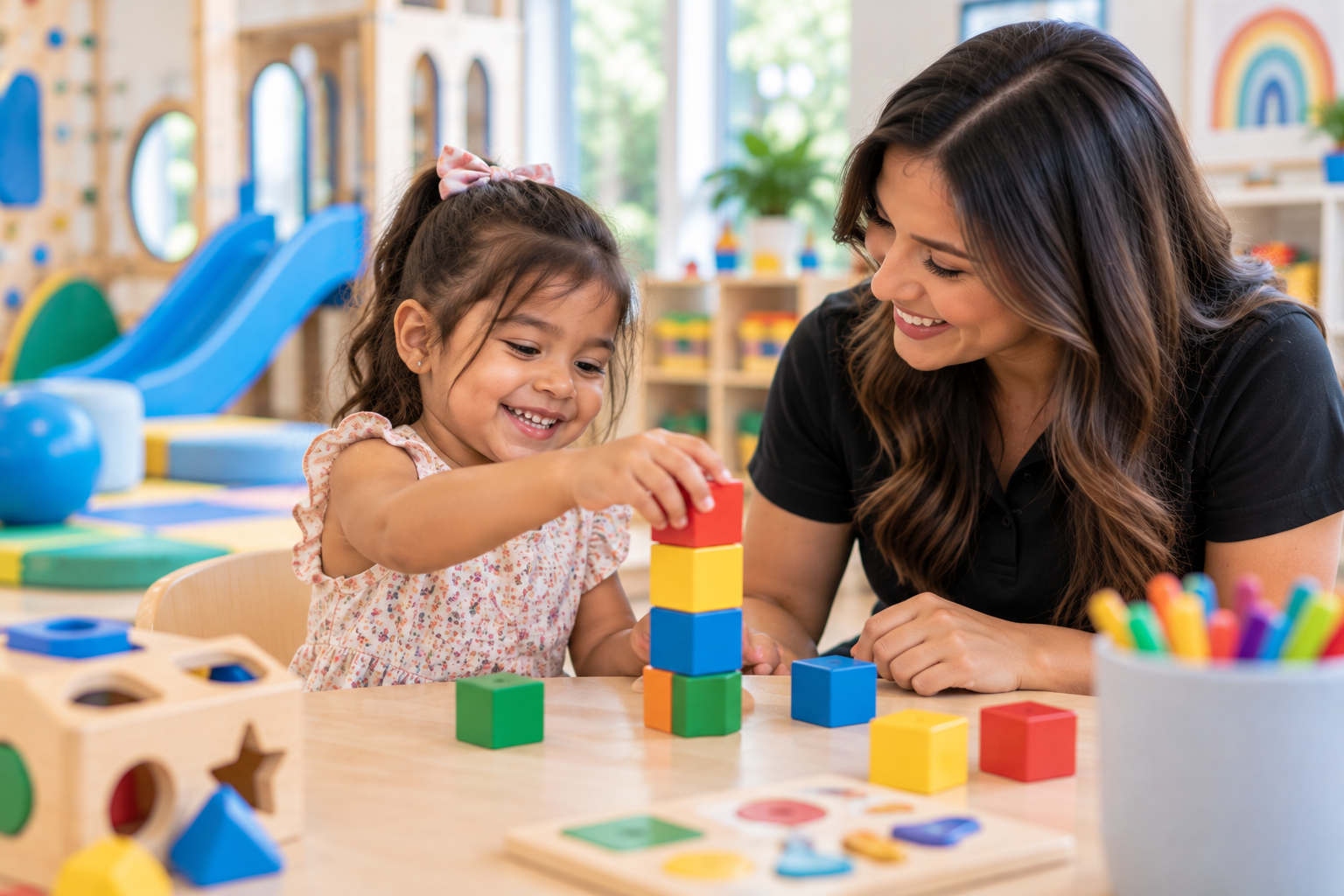
At My Favorite Therapists, ABA therapy for young children is designed to make learning engaging and meaningful, with opportunities to practice important skills through play, routines, social interaction, and everyday experiences.
Key Points
- ABA stands for applied behavior analysis and uses principles of learning and behavior to teach meaningful skills.
- ABA can address communication skills, social skills, play, independence, daily living skills, and behaviors that interfere with learning or safety.
- A Board Certified Behavior Analyst (BCBA) develops and oversees an individualized treatment plan.
- ABA for young children can incorporate play, positive reinforcement, natural learning opportunities, and structured teaching.
- There is no single appropriate number of ABA hours for every child; treatment intensity should be individualized.
- ABA may begin during early childhood, and early intervention can provide valuable opportunities for skill development.
- Insurance coverage for ABA varies by plan, state, diagnosis, and medical-necessity requirements.
What Is ABA Therapy?
In plain language, ABA helps us understand how children learn, how the environment influences behavior, and how we can teach skills that help children communicate, participate, and become more independent.
ABA therapists identify skills that may help a child communicate, participate, and become more independent and develop individualized strategies for teaching those skills. When behaviors interfere with learning, participation, or safety, behavior analysts may also assess the variables associated with those behaviors and develop individualized strategies based on that information.
One important strategy is positive reinforcement. When a child successfully uses a new skill or behavior, something meaningful follows it, making the child more likely to use that skill again.
The BCBA assesses the child's strengths, skills, and areas of need; evaluates behaviors that may interfere with learning, participation, or safety when appropriate; develops individualized treatment goals and intervention strategies; monitors data and progress; and adjusts treatment as the child's needs change.
- Functional communication and self-advocacy
The objective is not simply to change behavior. Meaningful treatment should focus on developing skills that improve a child's ability to communicate, participate, learn, navigate their environment, and become more independent.
How Do I Get My Child Started With ABA Therapy?
If your child has received an autism diagnosis and ABA has been recommended, begin by reviewing your child's evaluation and talking with the professionals involved in their care.
You can then contact ABA providers and ask about their programs, availability, treatment philosophy, insurance participation, caregiver involvement, and experience working with children of your child's age.
When comparing programs, look beyond the number of therapy hours offered. Ask how goals are individualized, how progress is measured, how parents participate, and how therapy incorporates your child's strengths and interests.
Frequently Asked Questions
1. What age does ABA therapy typically start?
ABA may begin in early childhood, including during the toddler and preschool years when clinically appropriate. There is no single required starting age. Early intervention is often encouraged because young children are rapidly developing foundational communication, social, play, and learning skills.
2. Does insurance cover ABA therapy?
Many insurance plans provide coverage for ABA therapy related to an autism diagnosis, but requirements and benefits vary. Families should verify coverage, prior authorization requirements, deductibles, copays, and network restrictions directly with their insurance company.
3. How long do children usually stay in ABA therapy?
There is no standard length of treatment. Some children receive services for months, while others participate for several years. Treatment should be regularly reviewed and adjusted based on progress, current needs, family priorities, and clinically meaningful goals.
4. Is ABA therapy only used for autism?
No. Applied behavior analysis is a broader science of learning and behavior. ABA principles can be used in different settings and populations. However, ABA is particularly well known for its application in supporting people with autism.
5. How is ABA different from occupational therapy?
ABA primarily applies principles of learning and behavior to develop individualized skills and address barriers to participation and independence. Occupational therapy focuses on helping people participate in everyday activities and may address areas such as sensory processing, self-care, fine motor skills, and functional participation. A child may receive ABA, occupational therapy, speech therapy, or a combination based on individual needs.
Helping Your Child Build Skills for What Comes Next
Learning about therapy options after an autism diagnosis can feel like learning an entirely new vocabulary. Understanding what ABA therapy is can make the process easier.
For young children, effective ABA therapy can turn everyday moments into opportunities to practice communication, independence, play, social interaction, and other meaningful skills.
The most important question is not whether one ABA program looks exactly like another. It is whether the program is individualized, developmentally appropriate, measurable, family-centered, and focused on skills that make a meaningful difference in your child's life.
If you're exploring ABA therapy for your child, My Favorite Therapists can help you understand the next steps and determine whether our early-childhood ABA services may be appropriate for your family.